7 tips for first-time automatic car drivers

Automatic cars have gained popularity in recent years and their ease of use makes them a very good choice both for first-time drivers and experienced manual car drivers. If you’re considering switching from a manual to an automatic car or if you’re planning on renting your first automatic car, you should be aware of some key differences.
To make sure you hit the road with confidence, here are 7 tips for first-time automatic car drivers.
1. Understand the shift lever
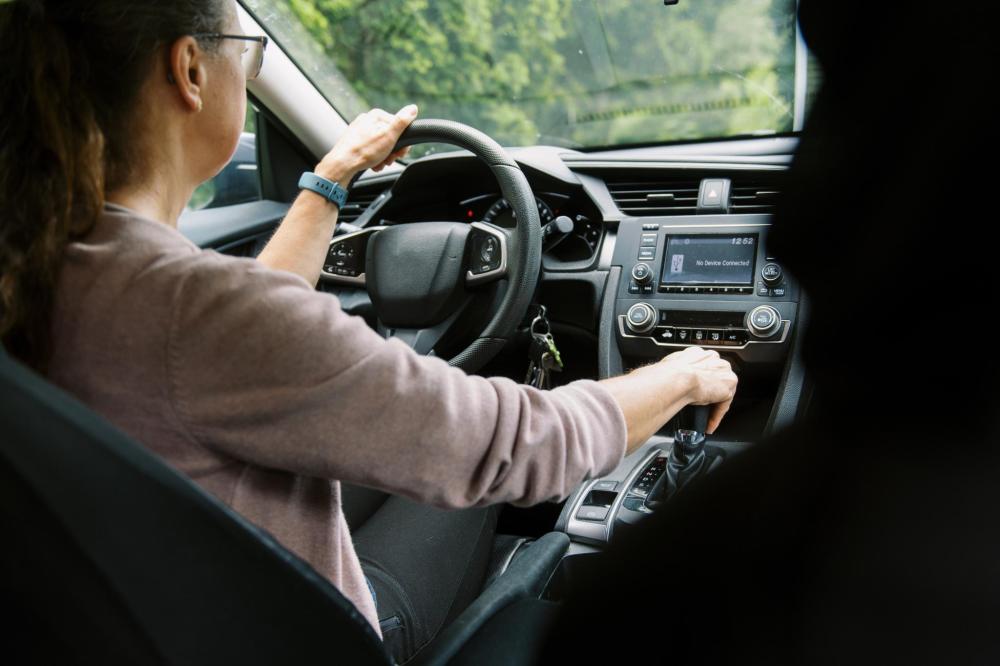
If you’re used to driving manual cars, the most noticeable change when switching to an automatic car is the shift lever. On an automatic car, the gear shift positions of a manual car are replaced by positions P, R, N and D. Here’s what they stand for and when to use them:
P (Park) – use this position when parking your car to stop it from moving in any direction. It’s highly recommended to always use the hand brake after parking, as otherwise the non-driven wheels may still spin.
R (Reverse) – this position is the same as on manual cars, you use it to move backwards.
N (Neutral) – puts the car into a neutral state.
D (Drive) – use it to drive forward. The transmission will automatically shift gears when you accelerate and decelerate or brake.
2. Understand the pedals
Going from three pedals – accelerator, brake and clutch – in a manual car to only two pedals – accelerator and brake – in an automatic car can be confusing and lead you to have some bad reflexes.
One key tip is to be careful not to rest your left foot where the clutch pedal would be in a manual car, as this could result in sudden and unintended braking in an automatic car. The best thing to do is get used to not using your left foot at all and rely entirely on your right foot for both braking and accelerating.
3. Practice acceleration and braking
There are several things to be aware of when it comes to accelerating and braking with an automatic car:
Beware that if you’re in D mode and you release your foot from the brake, the car will move forward. This is called “creeping”. Before switching to D mode and starting driving, make sure that your foot is on the brake pedal to prevent the car from moving unexpectedly.
Automatic cars accelerate quicker than manual ones when starting from a stop. For this reason, you’ll need to gently apply pressure to the accelerator pedal to accelerate smoothly. If you accelerate in the same way as with a manual car, you’ll experience sudden jerks that aren’t very comfortable.
When driving, accelerating will be slower with an automatic car than with a manual one. That’s because automatic transmissions are designed to change up gears at lower revs in order to protect the engine.
Braking with an automatic car is harsher than with a manual car. To avoid this, apply gentle pressure to the brake pedal when slowing down or coming to a stop.
4. Use the hand brake
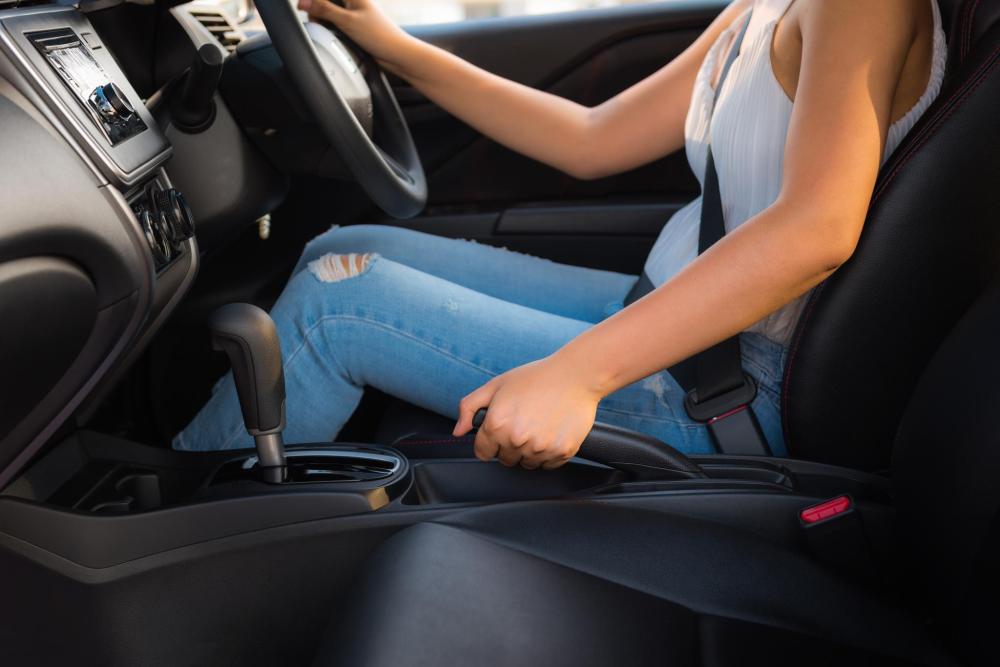
In addition to positioning the shift lever in P position when parked, you should also use the handbrake to prevent the car from rolling away. This also reduces stress on the transmission, which otherwise would eventually fail and be very costly to repair.
5. Be prepared for different driving scenarios
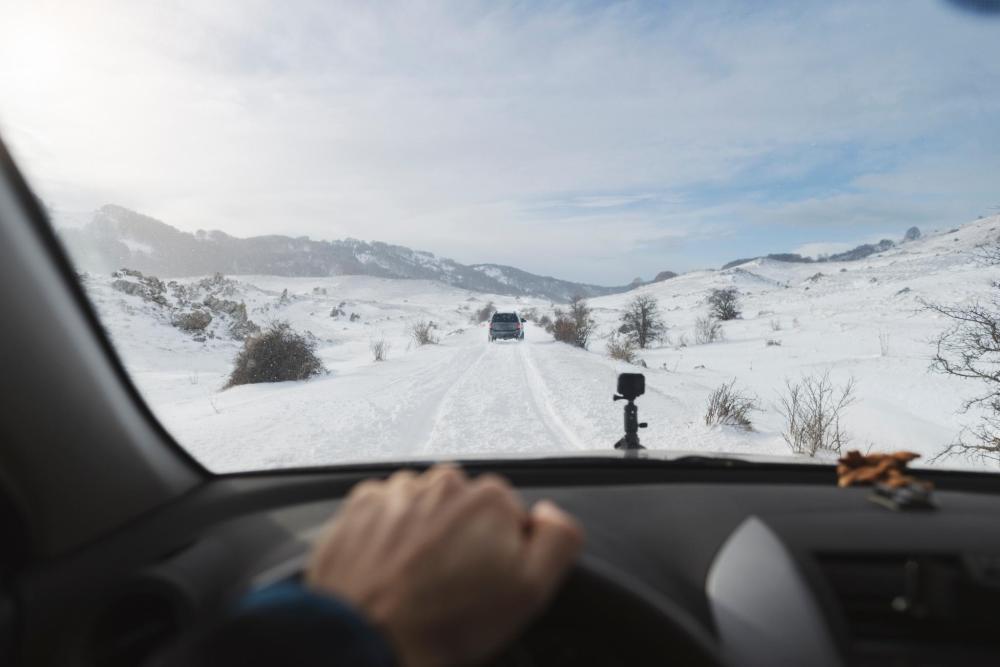
Some different driving conditions might require you to adjust your driving style:
As long as you’re driving on motorways, you won’t notice much difference with driving a manual car. You might only need more time to overtake other vehicles as automatic cars are slower to accelerate.
In traffic jams, automatic cars are much more comfortable to drive as you don’t have to constantly shift between neutral and first gear. Another strong point in favour of automatic cars is that you can’t stall, which is especially useful in traffic.
Parking with an automatic car can be easier and smoother as you can entirely focus your attention on angles instead of having to switch between first gear and reverse. Not being afraid of stalling is helpful if you don’t consider yourself great at parking. Also, the creep can give you a useful boost to slide effortlessly into your parking spot.
When parking uphill or downhill, make sure you use your handbrake before driving. Put your car into Drive mode and gently press the accelerator pedal. Once you feel the car is trying to move, release the handbrake. Apply more pressure to the accelerator to give the car more revs and you should drive away smoothly.
6. Practice
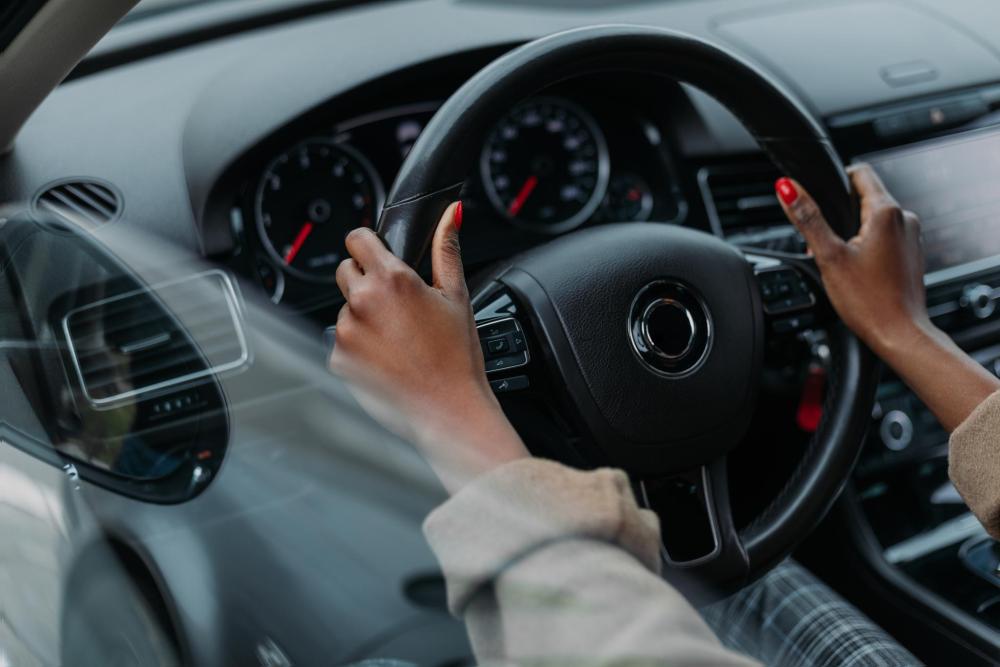
Before you start driving an automatic car for the first time, it’s best to practise driving somewhere quiet rather than immediately hit a busy road. You can also practise parking in an empty parking lot on a quiet day or late in the evening.
7. Make sure you have the right licence

Last but not least, make sure you have the right driving licence. If you already have a licence to drive manual cars, you’re also allowed to drive automatic cars. Some licences allow you to drive an automatic car but not a manual car, since you don’t practise shifting gears to take this driving test.
Driving an automatic car is an enjoyable experience, especially for first-time users. The key to having a smooth ride is practising acceleration, braking and parking to build confidence in the car. Practice makes perfect, so take the time to become comfortable with your new vehicle and be patient. This will only make your driving experience safer and your journey more enjoyable.