The ultimate guide to business class vs first class

- Ground handling
- Private transport to the aircraft
- Priority boarding and disembarking
When it comes to airline cabins, both business class and first class offer different benefits, but it can be challenging to distinguish between the two cabin classes.
While both can offer an upgrade over economy class, understanding what you actually get with each class will help you make the right decision for your travel needs and budget.
What are the four types of cabin classes?
Economy class
Economy offers basic air travel. Seats are often narrow, with limited legroom and are often positioned close together, with little space between them. While this fare gets you a seat and a complimentary non-alcoholic drink, bags, food and seat selection may cost extra.
Premium economy class
This is a step up from economy, but not quite business class. It offers more legroom, wider seats and a better recline. Sometimes, it includes upgraded meals, priority boarding and extra baggage allowance, but check with the airline before booking, as policies and inclusions vary. Policies and inclusions vary, so check with the airline before booking.
Business class
While business class can offer a first-class-style experience on some airlines, some flagship carriers continue to distinguish between their business-class and first-class service levels.
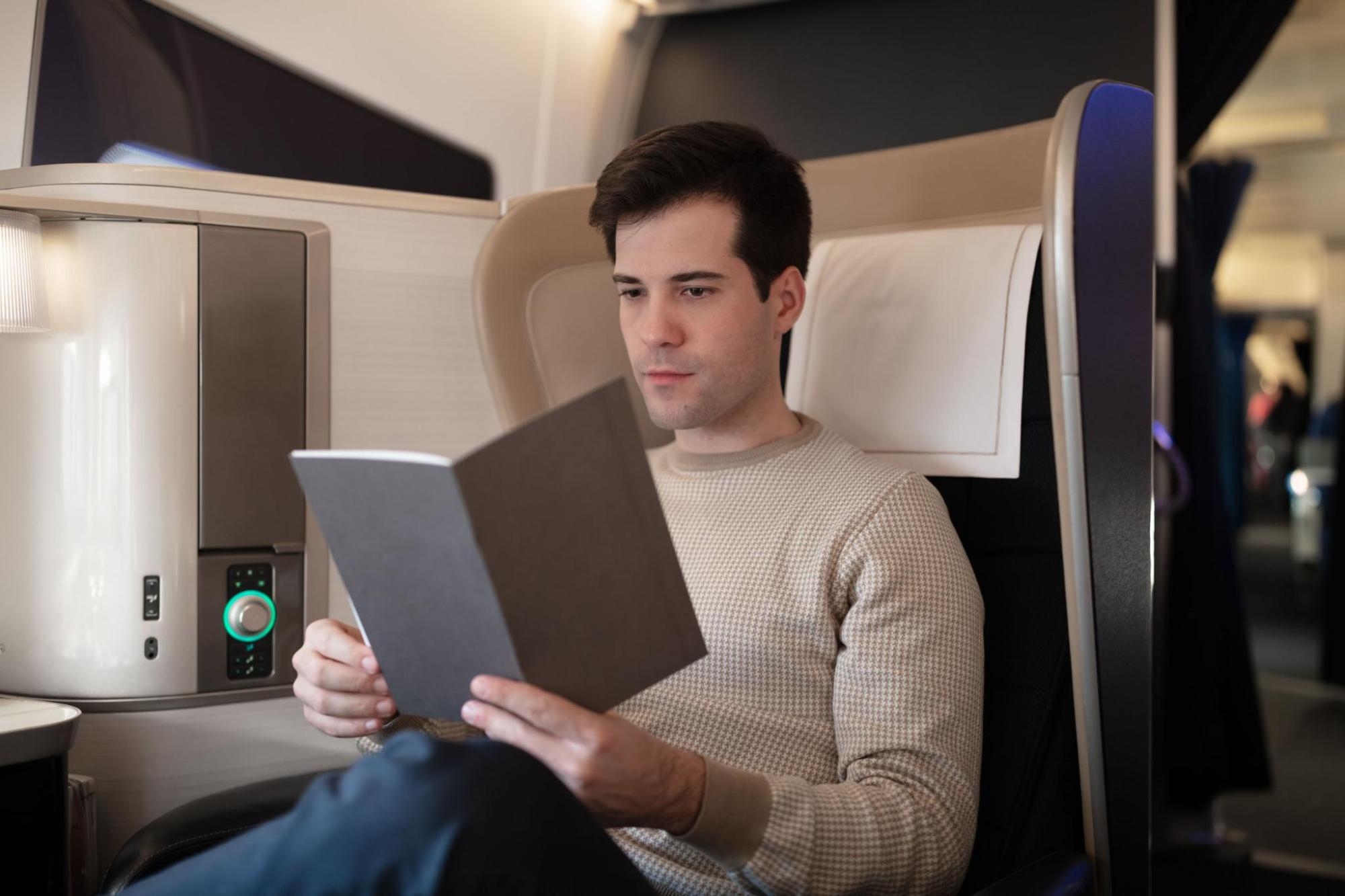
Business-class passengers may enjoy spacious lie-flat seats, high-quality meals and priority boarding. It is designed for comfort and efficiency, catering to both business and leisure travellers who want a smoother journey without the extravagance of first class.
First class
First class focuses on privacy and personal service. Think private suites with doors, personalised dining and facilities such as caviar service and designer pyjamas. Some airlines even offer chauffeur services and private lounge access.

The difference between business class and first class
While business class offers a comfortable experience, first class is for those seeking greater privacy and more personalised service. The choice between the two ultimately depends on your preferences and budget. First class, when it is offered, is available on fewer routes and usually costs substantially more than business class.
Seats
Business class offers lie-flat or angled-flat seats on long-haul flights, with direct aisle access on newer planes. In first class, the seats may be located in fully enclosed suites, with comfortable beds and private bathrooms.
Drinks
In business class you can expect premium wines, champagne and spirits (mid-to-upper shelf). Craft cocktails may also be available, although the selection may be limited. Espresso drinks and speciality teas tend to be included.
In first class, the selection may include premium options: you can look forward to a more curated wine list, sometimes with a sommelier-selected tasting flight, bespoke cocktails and on-demand bar service.
Food
In business class, you will eat multi-course meals, often with options from a printed menu and well-presented dishes. A typical meal may include a starter, main course, cheese and dessert. However, first class offers a more elaborate dining experience.
Courses are more elaborate and customisable, with ingredients such as caviar, wagyu and lobster. You determine when you eat, with restaurant-style presentation, sometimes with china and metal cutlery embossed with the airline logo. Some airlines partner with celebrity chefs to create menus; other airlines have chefs on board certain long-haul flights – called flying chefs – to plate and finish the dishes.
Lounge access
In business class, you will typically get access to the airline's business lounge or a partner lounge. These lounges are a more comfortable alternative to a busy terminal; they offer comfortable seating, showers, Wi-Fi and a buffet of hot and cold foods. Alcohol is included, usually mid-range wines and spirits, and some lounges have self-serve bars or, if available, a staffed bar. The atmosphere is relaxed but can get crowded, especially during peak hours.
First class, on the other hand, is often a more personalised lounge experience. Many airlines provide access to a separate first-class lounge, or even an entirely different terminal. These lounges have limited capacity and personalised service from the moment you walk in. Rather than taking snacks from a buffet, you may be served à la carte meals and premium drinks.
Some first-class lounges offer more than a place to wait, with features such as cigar lounges, art-focused spaces, spas, complimentary treatments, private nap rooms and champagne tastings.
Service
The difference in service comes down to the level of personal attention and privacy offered. In business class, flight attendants are attentive, but they are managing more passengers, so the service is structured around speed and consistency.
On international flights, your seat may convert into a flat bed, and you may receive a welcome drink, an amenity kit and noise-cancelling headphones. It is an experience designed for productivity and a good night's sleep – but it is still efficient and structured.
First-class service may offer more personalised attention. Cabin crew often greet you by name, offer to hang your coat and address you with a level of attentiveness that borders on concierge-style. You may also be guided through the menu, with recommendations based on your preferences.
You might dine alone or with a companion, as some airlines offer seats with a companion ottoman for in-flight dining for two. The amenity kits are often filled with high-end skincare or designer-branded items. Bedding, pyjamas and even slippers are frequently provided.
On some airlines, first-class passengers may be driven to the aircraft in a private car, escorted by staff through security or offered spa services on board or in the lounge.
Price
The price difference between business class and first class is substantial. On some international routes, a first-class fare may cost between 1.5 and five times as much as a business-class fare; prices vary by route, airline and booking date. Sometimes it is even more, especially if you are booking close to departure or flying with a premium airline.
For example, if a return business-class ticket from New York to London costs around £3,000 to £4,500, first class on that same route could cost approximately £6,000 to £11,000.
However, not all routes offer both classes anymore. Many airlines have scrapped first class entirely and elevated business class into a hybrid model – a business-class offering with features traditionally associated with first class, such as sliding doors, lie-flat beds and upgraded service. But where both cabins exist, passengers are paying a significant premium for more privacy, more personal service, a wider choice of wine and exclusivity.
Onboard facilities
When it comes to onboard facilities, the differences between business and first class are about quality in the details. Business class provides the essentials – a standard travel kit, decent bedding (pillow, blanket, maybe a mattress pad) and shared, standard toilets. Entertainment screens are large but fixed into the seat shell.
First class typically offers more extensive features. Amenity kits are high-end, bedding includes duvets, mattress toppers and full-sized pillows, often with a full turn-down service. Entertainment systems are larger, more advanced and more customisable. On some airlines, you can take a shower at 40,000 feet, complete with plush towels and expensive toiletries.
Perks
Whether you fly business or first class, you can expect some additional benefits. Here are a few examples:
- Ground handling: in first class, you might be met at the airport by a personal assistant who escorts you through check-in, security and immigration – often through private lanes or completely separate facilities. In business class, you are still using the premium line, but you may use it without a dedicated escort.
- Private transport to the plane: on certain airlines, first-class passengers are offered chauffeured transfers to the aircraft. Business class-passengers may have to walk to the aircraft. The exact service varies by airline and airport.
- Priority boarding and disembarking: business class may get priority boarding. First-class boarding may be handled separately, depending on the airline and airport. You may board or disembark separately from other passengers, depending on the airline and airport.
- Luggage handling: first-class baggage often receives priority handling, depending on the airline and airport, so it may arrive first on the baggage carousel.
- Guest access: first-class lounges in some airports allow you to bring up to two adult guests or an adult guest and a family member under 18, even if they are not flying first. Business lounges are stricter about guest access, often not permitting it unless they are flying business too.
- Reservation perks: first-class passengers may receive assistance beyond their flight, such as restaurant bookings or airport support.
What to expect from a business-class flight
You may have priority check-in and access to a business-class lounge, while security access varies by airport and ticket. The lounge offers free food and drinks and usually a place to shower if you are mid-journey.
Then, you may board early, but not always first; some airlines prioritise families or first class. Still, you will have time to get settled without being constantly jostled by neighbouring passengers.
On long-haul flights, you may have a lie-flat seat, usually with direct aisle access. On shorter routes, you may get a wider, reclining seat. The cabin is calmer and quieter. You may be greeted by name, usually offered a drink before take-off and handed a menu.
What to expect from a first-class flight
Boarding order varies by airline, airport and ticket. No lines, no fighting for overhead bin space, no elbows. Sometimes, you will be personally escorted to the aircraft.
Your seat may be more like a suite, with a door, a wardrobe, a minibar, a large entertainment screen and ample storage. Service may be attentive, with more cabin crew per passenger on some airlines. You may be served meals and drinks and, on some airlines, leave the plane among the first passengers.
Business class vs first class
Many airlines have eliminated international first class entirely and replaced it with high-end business-class products.
Think lie-flat seats, sliding privacy doors, chef-designed meals and boutique facilities, some of which were previously associated with first class and are now offered in business class.
Business class pros
Business class can offer lie-flat seats, priority check-in, boarding and baggage handling, as well as more elaborate food and drink than in economy.
You also get lounge access, which means a quieter space to relax, work or drink something decent before your flight. The cabin may offer more room and is usually quieter than economy class.
Business class cons
The price can be substantially higher than economy, which may not offer good value on shorter flights. Quality can vary significantly depending on the airline and aircraft – some business cabins are nearly first class, others feel like a slightly elevated economy class.
You are still in a shared space with other passengers, so privacy is limited. On some short-haul flights, ‘business class’ is just an economy seat with no middle seats and a nicer meal.
First class pros
Some airlines continue to invest in first-class cabins. First class is designed to offer greater privacy and more personal service.
First class cons
First class is typically the most expensive cabin available, so the price is one of its biggest cons. For some travellers, the additional services may justify the higher cost.
International vs domestic flights: business class or first class?
In the US, airlines call the front cabin ‘first class’, even if it is what would be called ‘business class’ elsewhere. The label is often more a marketing term than a description of the service. It becomes very meaningful, however, when it comes to international flights.
Business class is a significant upgrade – lie-flat seats, better food, lounges, real sleep and often a lower price than first class. First class on long-haul international flights is designed to offer the highest level of service. Think enclosed suites, on-demand dining, private lounges, chauffeur service and other additional benefits.
Booking tips
How can you get an upgrade?
Remember, the quality of your first-class experience is going to depend on where you are flying to and from and what airline. It would be best to have realistic expectations about what an upgrade might look like.
- Book a tier down from where you are hoping to upgrade to: airline upgrade rules vary, and upgrades depend on availability. If you are aiming for first class, book business. Want business? Start in premium economy. It is cheaper than booking the top tier outright, and you can use points or miles or cash to pay for an upgrade, depending on the airline's rules.
- Combine points and cash: points, miles and dollars can be combined to get into first class, depending on the airline and the booking options available. Points from some credit cards can be transferred to airline mileage programmes, often at a one-to-one ratio. A combo of miles and points can make booking a first-class reward ticket a little less financially steep.
- Use frequent-flyer status: can help with upgrade eligibility, but policies vary by airline. Airlines prioritise elite members – especially top-tier ones – for complimentary or last-minute upgrades. If you fly a lot with one airline, consider concentrating your flights with it if its loyalty programme suits you.
- Check the seat map carefully: the aircraft you fly on can impact your experience, as different kinds of planes offer different levels of privacy. The type of plane will be listed in your ticket confirmation, and a quick search of that plane type and the airline name will reveal a seat map. You can do even more online research to uncover what seats are quietest or have the most legroom.
- Be patient: after booking (or sometimes at check-in), airlines may offer discounted bids for upgrades or fixed-price upgrades. It is not free, but it can be cheaper than booking the premium cabin outright.