The complete guide to driving in Italy for UK travellers

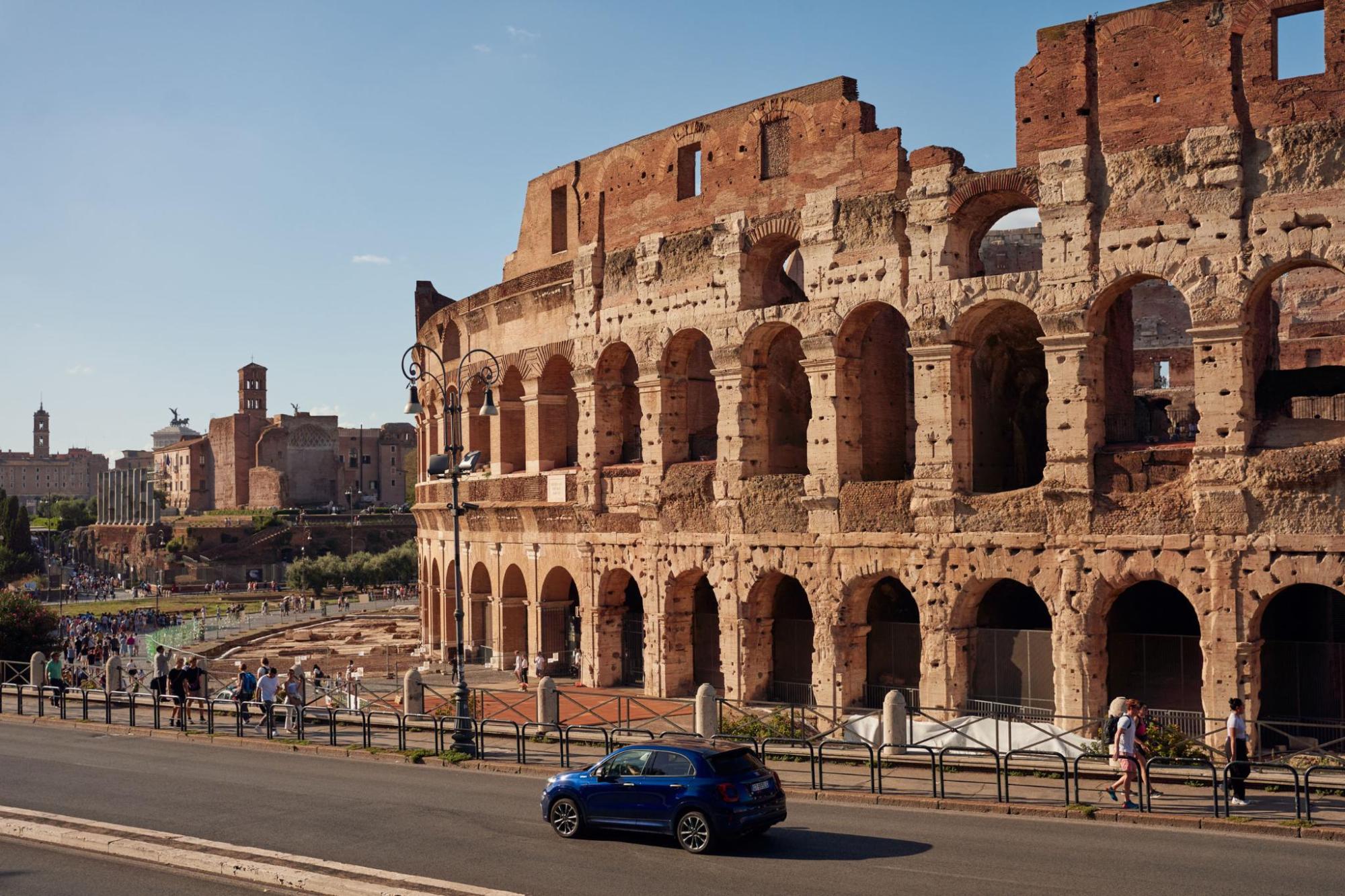
If you’re planning to drive through any city centres during your Italian road trip, you’re likely to come across a Zona a Traffico Limitato (ZTL). These restricted traffic zones are marked by signs, and driving within them without authorisation will leave you with a sizable fine.
Are you dreaming of an Italian road trip? You’re certainly not alone – Italy is a popular driving destination. Picture motoring around the country at your own pace, taking in its ancient cities, coast, mountain views and countryside. And of course, indulging in local Chianti, cannoli and Parmigiano Reggiano along the way.
This guide covers the documents, road rules, practical considerations and routes to know before driving in Italy. Driving rules, document requirements, charges and penalties can change, so check the latest official guidance before travelling.

Important documents for driving in Italy
Before we get started, let’s talk about the essential motoring documents you need to take with you. Bear in mind that if you set off without some of these documents, you may not be able to drive legally in Italy at all.
Here’s what you’ll need:
1. A full, valid UK photocard driving licence
If you want to start driving in Italy you’ll need to bring your UK driving licence with you. With a valid UK photocard driving licence you can drive in Italy without an International Driving Permit or a separate Italian licence. You won’t need to take another test.
2. An International Driving Permit (IDP)
However, if you still have a UK paper licence rather than a photocard licence, or your licence was issued in Gibraltar, Guernsey, Jersey or the Isle of Man, you may need an IDP to drive in Italy. This document is essentially an official translation of your UK driving licence, and should be carried alongside your licence.
Furthermore, if you’re hiring a car in Italy, some car rental companies may ask for an IDP, regardless of the type of licence you hold.
It’s easy to get an IDP in the UK. Simply head to your nearest PayPoint store and present a valid full UK driving licence, a recent passport photo and, if you have a paper licence, an original valid passport. As of August 2026, an IDP costs £5.50. You can get one in person from certain shops with PayPoint.
3. Proof of identity: passport
When driving in Italy as a UK national, you’ll need your passport to enter and leave Italy and a photo ID if you’re stopped by the police while driving. Travellers of other nationalities should check the entry and identification requirements for their own passport or residence status.
4. V5 registration document
If you’re driving your own vehicle rather than renting a car in Italy, you’ll need to bring your V5 registration document with you too. This is your certificate of vehicle registration. It’s a legal requirement that you carry it when driving Italy’s roads.
5. Car insurance certificate
If you’re driving your own car, take your insurance certificate and check that your policy covers you in Italy. UK vehicle insurance provides the minimum third-party cover required in the EU, including Italy, but check whether you need additional cover for damage or theft. If you’re hiring a car, check what is included in the rental agreement and whether the company requires any extra documents.
6. UK sticker
If you’re planning to drive your own car, or any other UK-registered vehicle, in Italy, you may need to display the UK identifier on your vehicle.
If your number plate already includes the UK identifier with a Union Jack, you’re already covered. However, you’ll need to display a UK sticker clearly on the rear of your vehicle if your number plate includes any of the following:
- A GB identifier with the Union Jack
- A Euro symbol
- A national flag of England, Scotland or Wales
- Numbers and letters only, with no flag or identifier

A guide to driving in Italy for UK drivers
Now you’ve got all your documents in order, it’s time to hit the road. Here are ten practical points for UK drivers travelling in Italy.
1. Drive on the right
This is the big one – in Italy, motorists drive on the right-hand side of the road.
2. Watch out for ZTL zones
If you’re planning to drive through any city centres during your Italian road trip, you’re likely to come across a Zona a Traffico Limitato (ZTL). These restricted traffic zones are marked by signs, and driving within them without authorisation can result in a fine. In fact, unless the property confirms that it can register your vehicle for ZTL access, it might be best to avoid driving in city centres altogether if you are not familiar with the city.
3. Know the speed limits
Much like in the UK, Italy’s speed limits are displayed on circular road signs with red borders. Unlike the UK, these speed limits are displayed in kilometres per hour (kph) rather than miles per hour (mph).
General speed limits in Italy are:
- 50 kph (31 mph) in urban areas
- 90 kph (56 mph) on main roads
- 130 kph (81 mph) on motorways, known as autostrade in Italian
Bear in mind that many speed checks on Italy’s roads are automatic, and exceeding the speed limit can result in a fine.
4. Petrol stations
In the UK, many petrol stations open 24 hours a day. In Italy, some petrol stations close on Sundays or during lunch breaks, so check opening hours before setting off.
5. Autostrade tolls
Many Italian motorways, known as autostrade, charge tolls, so it’s vital to keep cash or cards available when driving. You’ll collect a ticket upon entry to the toll zone, and pay when exiting.
6. Parking and fines
To park without incurring a fine, pay attention to the lines painted on the road.
Here’s what different colour lines generally mean in Italy:
- Blue lines indicate paid parking
- White lines mean you can park there for free
- Yellow lines signify residents-only parking
However, check nearby signs too, as they can change the meanings of the lines – for example, white lines can also signify taxi bays. Parking rules can be enforced through fines sent to a UK address, even months later. Check any notice against the issuing authority and follow its payment or appeal instructions.
7. Keep your headlights on
Outside built-up areas, cars may be required to use dipped headlights, even during the day.
8. Important items for driving in Italy
When driving in Italy, you need to keep a number of essential items in your vehicle, in case of emergency.
These include:
- Reflective jackets for all passengers: high-visibility vests are required by law. You must have one for each person in the car and wear one if you leave the vehicle on a motorway.
- A warning triangle: you are required by law to keep a warning triangle in your car and use it in case of a breakdown to warn other drivers.
- Headlamp beam deflectors: if you’re driving a UK car designed for the left-hand side of the road, its headlamps may dazzle oncoming drivers on roads where traffic keeps to the right To fix this, you may need deflector stickers, or if your car allows it, you can adjust the beam manually.
9. In an emergency
In the event of an emergency, dial 112 for emergency services. There’s no need to use a country code when you’re calling from inside Europe.
If you need roadside assistance, contact the Automobile Club of Italy (ACI) on 800 116 800 if you’re calling from a mobile phone from outside Italy, or 803 116 if you’re calling from a landline or mobile with an Italian provider. ACI Road Assistance is available 24 hours a day, 365 days a year.
On a motorway? There should be an SOS post nearby. You can use it to request roadside assistance.
10. Useful words and phrases for driving in Italy
- Car – Macchina or Auto
- Driver – Autista or Conducente
- Driving licence – Patente di guida
- Insurance – Assicurazione
- Petrol – Benzina
- Diesel – Gasolio
- Parking – Parcheggio
- Stop – Stop or Alt
- Give way – Dare la precedenza
- No entry – Divieto di accesso
- One way – Senso unico
- Exit – Uscita
- Entrance – Entrata or Ingresso
- Centre – Centro
- Motorway – Autostrada
- Ring road – Tangenziale
- Traffic – Traffico
- Traffic jam – Ingorgo
- Roadworks – Lavori in corso
- Detour – Deviazione
- Toll – Pedaggio
- Speed limit – Limite di velocità
- Fine – Multa
- Parking meter – Parchimetro
- Parking disc – Disco orario
- Free parking – Parcheggio gratuito
- Paid parking – Parcheggio a pagamento
- No parking – Divieto di sosta
- Residents only – Solo residenti
- Restricted traffic zone – Zona a traffico limitato (ZTL)
- City centre – Centro storico
- Authorized vehicles only – Solo veicoli autorizzati
- Camera – Autovelox
- Police – Polizia
- Breakdown – Guasto
- Mechanic – Meccanico
- Petrol station – Distributore or Stazione di servizio
- Hospital – Ospedale
- Pharmacy – Farmacia
- Where is the nearest petrol station? – Dove è il distributore più vicino?
- How much is the parking? – Quanto costa il parcheggio?
- I need help – Ho bisogno di aiuto
- Where is the city centre? – Dove è il centro città?
- I'm lost – Mi sono perso (masculine) or Mi sono persa (feminine)
- Excuse me – Mi scusi

6 tips for planning your Italian road trip
Ready to plan an Italian road trip? Here are six practical tips for driving in Italy for the first time:
1. Avoid driving in major cities
Major tourist cities like Florence, Rome and Bologna have extensive ZTL zones that can leave you with significant fines. With this in mind, it’s important to research your journey ahead of time to identify these ZTL areas and plan your route around them. The easiest option is to plan to park outside major cities and then use public transport or walk into the city itself. If your property is in a ZTL, contact it in advance to ask whether it can register your number plate for authorised access.
2. Book accommodation with parking
Parking spaces can be limited in Italian cities, and parking can be expensive. Booking accommodation with parking makes travelling by car a lot easier. Search for properties that offer parking facilities and check whether there is an extra charge to avoid hours of circling narrow streets seeking legal parking spots.
3. Give yourself extra time for the mountains and coast
You can use Google Maps to find out roughly how long it should take you to get from A to B. However, travel times can be longer than route planners suggest on winding mountain roads and busy coastal routes. For instance, if you’re driving around the Amalfi Coast, through the Cinque Terre or over Alpine passes–especially in peak season– build extra time into your itinerary and consider travelling these routes early in the morning when there’s usually less traffic.
4. Download offline maps
Mobile coverage can fluctuate in mountainous regions, so it’s worth downloading maps ahead of your journey.
5. Budget for tolls and fuel
When allocating money for your trip, don’t forget to budget for tolls and fuel. Tolls can quickly add up on Italy’s motorways, and fuel prices vary by location.
6. Learn essential Italian road signs
In order to navigate Italian roads, you’ll need to familiarise yourself with key road signs such as:
- Centro – city centre
- Uscita – exit
- Deviazione – detour
Popular Italian road trip routes
Looking for some Italian road trip inspiration? Here are seven Italian road trip routes to consider:
1. Amalfi Coast drive (Campania)
Route: Naples – Sorrento – Positano – Amalfi – Ravello
Explore one of Italy’s best-known areas. The route follows steep coastal roads, with views of the sea, villages and lemon groves.
2.Tuscan wine route (Tuscany)
Route: Florence – Chianti – Siena – Montalcino – Montepulciano
Visit medieval towns and sample local wines among rolling hills and cypress trees.
3. The Great Dolomites Road (Trentino-Alto Adige and Veneto)
Route: Bolzano – Val Gardena – Cortina d’Ampezzo – Belluno
Travel along mountain passes, stopping to explore nearby hiking trails.
4. Puglia coastal loop (Puglia)
Route: Bari – Polignano a Mare – Alberobello – Ostuni – Lecce – Otranto
Visit towns, olive groves and trulli houses before relaxing on beaches along the Adriatic coast.
5. Sicilian heritage circuit (Sicily)
Route: Catania – Taormina – Mount Etna – Agrigento – Palermo – Cefalù
Combine volcanic landscapes and historic sites with local seafood lunches on a Sicilian adventure.
6. Northern lakes tour (Lombardy and Veneto)
Route: Milan – Lake Como – Lake Lugano – Lake Maggiore – Lake Garda – Verona
Take in some of Italy’s most famous (and most glamorous) sights on lakes, villas, and boat rides.
7. The Roman countryside and lakes (Lazio and Abruzzo)
Route: Rome – Tivoli – Castel Gandolfo – Lake Bracciano – L’Aquila
Rome is the starting point for a route through Lazio and Abruzzo. Visit historic villas, volcanic lakes and countryside beyond the city.