Flight terms and phrases: a guide to aviation terms

- Cross-check means cabin crew verify emergency slides are armed or disarmed
- Pilots use the NATO phonetic alphabet (Alpha, Bravo, Charlie) to make sure there is clarity over radio
- ‘Light chop’ means mild turbulence while ‘holding pattern’ means circling waiting to land
Flying can feel like stepping into a world with its own language. Pilots speak in codes, cabin crew use specific phrases and the aircraft itself has parts with technical names. Whether you're curious about what pilots are saying over the intercom or want to know what ‘cross-check’ actually means, this guide breaks down the most common terminology you'll encounter from check-in to landing.
General flight and airport terms
Before you board the plane, you'll encounter specific aviation terms at the airport. You might hear these terms at the gate, on boarding passes or in announcements throughout the terminal.
Boarding pass: your ticket to board the aircraft, showing your seat assignment, boarding group and flight details.
Gate: the departure point where you'll board your flight. Gates are typically identified by letters and numbers (e.g., Gate B12).
Jetway or airbridge: the enclosed, movable connector that extends from the terminal to the aircraft door, allowing passengers to board without going outside.
Tarmac: the paved area where aircraft park, taxi and sometimes wait. Technically called the ‘apron’ in aviation circles, but commonly referred to as the tarmac.
Taxiing: the movement of an aircraft on the ground under its own power. You'll experience this after pushback from the gate and again after landing.
Pushback: when a tug vehicle pushes the aircraft backwards away from the gate before it can taxi under its own power.
Holding pattern: a racetrack-shaped flight path that aircraft fly while waiting for clearance to land. You might hear the pilot mention this during delays.
Final approach: the last phase of flight before landing, when the aircraft is aligned with the runway and descending.
Terms you'll hear from the crew and at the gate
Cabin crew and gate agents use specific phrases that might sound out of context if you're not familiar with aviation vocabulary. Here's what they actually mean:
Cross-check: this instruction tells cabin crew to verify that their opposite number has armed or disarmed the emergency slides on the aircraft doors. You'll hear ‘doors to manual and cross-check’ after landing.
All-call: a request for all cabin crew members to check in via the intercom system, confirming everyone is ready for departure or arrival.
Equipment: in aviation, this refers to the aircraft itself, not baggage. When you hear ‘equipment change,’ it means a different plane will operate the flight.
Pre-board: passengers who require extra time or assistance can board before general boarding begins. This typically includes families with young children, elderly passengers and those needing mobility assistance.
Ground stop: a temporary halt to all departures, usually due to weather or air traffic congestion at the destination airport.
Wheels up: the moment the aircraft's landing gear leaves the runway during takeoff. This marks the official departure time.
The phonetic alphabet: alpha, bravo, charlie
Pilots and air traffic controllers use the NATO phonetic alphabet to make sure there is clarity over radio communications. Each letter is assigned to a specific word to prevent confusion, which is especially important when spelling out gate numbers, flight codes or instructions.
A | Alpha | N | November |
B | Bravo | O | Oscar |
C | Charlie | P | Papa |
D | Delta | Q | Quebec |
E | Echo | R | Romeo |
F | Foxtrot | S | Sierra |
G | Golf | T | Tango |
H | Hotel | U | Uniform |
I | India | V | Victor |
J | Juliet | W | Whiskey |
K | Kilo | X | X-ray |
L | Lima | Y | Yankee |
M | Mike | Z | Zulu |
So when you hear "proceed to gate Charlie Seven," they're referring to gate C7.

In the cockpit: pilot lingo explained
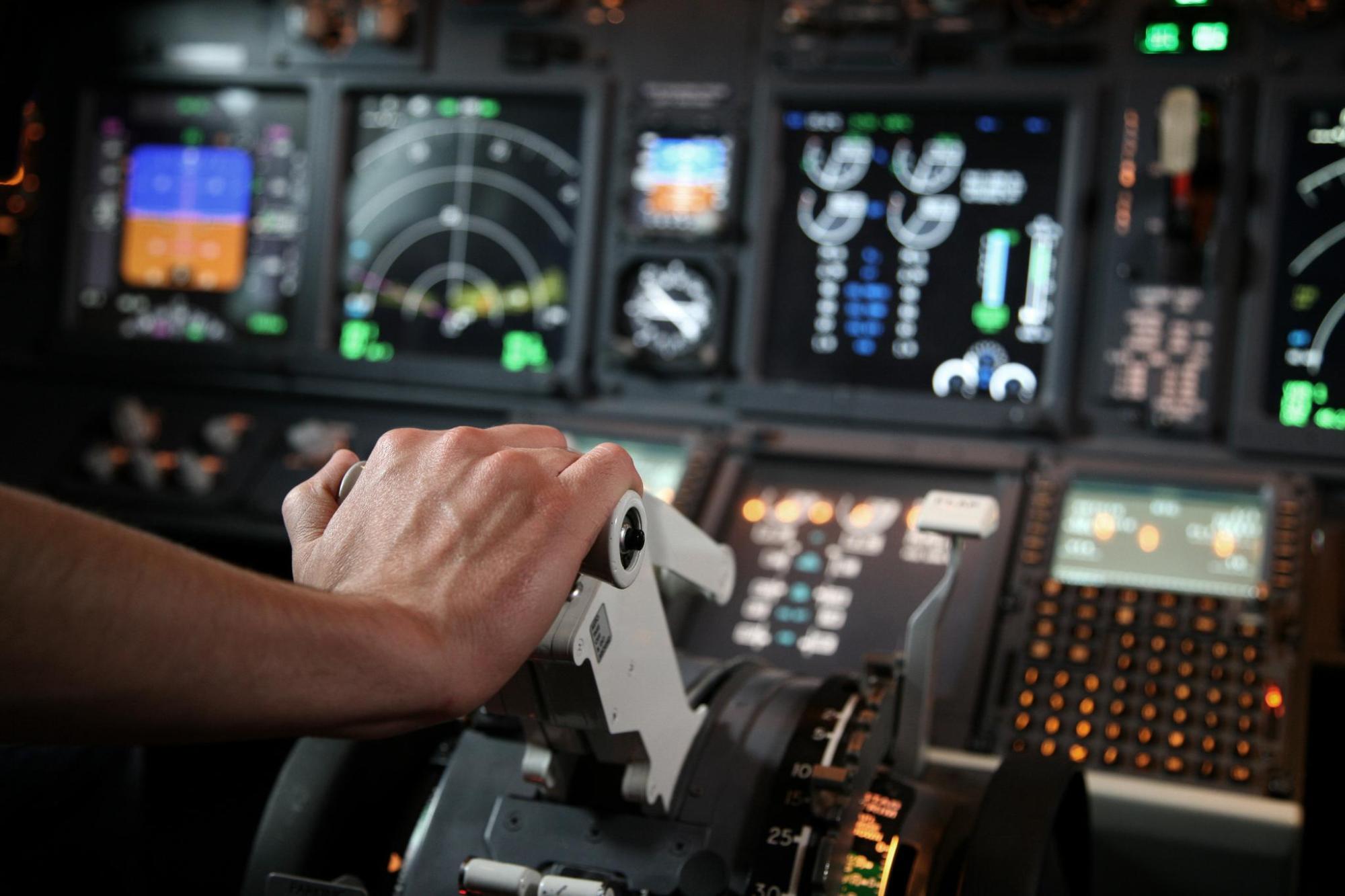
The cockpit, the front section of the aircraft where pilots control the plane, is where many technical aviation terms originate. This command centre lets pilots monitor instruments, communicate with air traffic control and make decisions that make sure all travellers have a safe flight. Here’s some of the terms they might use to other crew or during passenger announcements:
Flight deck: another term for the cockpit, used interchangeably in modern aviation.
Autopilot: a system that automatically controls the aircraft's flight path, allowing pilots to monitor rather than manually fly during cruise. Pilots still oversee everything and can take manual control instantly.
Flight plan: the detailed route filed before departure, including altitude, speed, waypoints and estimated arrival time.
Altitude: height above sea level, measured in feet. Cruising altitude for most commercial flights ranges from 30,000–42,000 feet.
Airspeed: how fast the aircraft moves through the air, different from ground speed due to wind.
Heading: the direction the aircraft is pointing, measured in degrees (0–360) from north.
Cleared for takeoff: official permission from air traffic control for the aircraft to begin its takeoff roll.
Rotate: the instruction or moment when pilots pull back on the controls to lift the nose during takeoff.
Cruise: the phase of flight between climb and descent, typically where the aircraft reaches its most efficient speed and altitude.
Descent: the gradual reduction in altitude as the aircraft approaches its destination.
Common pilot-to-passenger announcements
Understanding what pilots say during announcements helps you know exactly what's happening during your flight.
"Flight attendants, prepare for departure": signals cabin crew to complete final checks and take their seats for takeoff.
"We've been cleared for takeoff": air traffic control has given permission to begin the takeoff roll.
"We've reached our cruising altitude of...": the aircraft has finished climbing and levelled off for the main portion of the flight.
"We're beginning our descent": the aircraft is starting to lower altitude in preparation for landing.
"Flight attendants, prepare for landing": cabin crew should secure the cabin and take their seats for arrival.
"We're number three for takeoff": two aircraft ahead of you in the queue for departure.
"We're in a holding pattern": the aircraft is circling while waiting for clearance to land, usually due to traffic or weather.
"We've experienced some light chop": mild turbulence. ‘Chop’ refers to small, rapid up-and-down movements.

The aircraft: plane parts and functions
Understanding basic plane terms helps you visualise what's happening during different phases of flight. Modern commercial aircraft are marvels of engineering with hundreds of components working together.
Key parts of the plane and what they do
Fuselage: the main body of the aircraft where passengers, crew and cargo sit. It's the long tube that connects the nose to the tail.
Wings: provide lift that keeps the aircraft airborne. Their curved shape creates different air pressures above and below, generating upward force.
Engines: mounted under the wings or on the rear fuselage, they provide thrust to propel the aircraft forward.
Landing gear: the wheels and supporting structure that allow the aircraft to take off and land. They retract into the fuselage during flight to reduce drag.
Flaps: panels on the trailing edge of the wings that extend during takeoff and landing to increase lift at lower speeds.
Slats: panels on the leading edge of the wings that also extend during takeoff and landing for additional lift.
Ailerons: hinged surfaces on the outer wings that control roll (banking left or right).
Rudder: the vertical surface on the tail that controls yaw (left or right direction).
Elevators: horizontal surfaces on the tail that control pitch (nose up or down).
Winglets: the upturned tips at the end of wings that reduce drag and improve fuel efficiency.
Tail: the rear section of the aircraft, including the vertical and horizontal stabilisers that keep the plane stable.
Nose: the front of the aircraft, housing the cockpit and weather radar.
Galley: the onboard kitchen where cabin crew prepare food and beverages.
Lavatory: the aircraft toilet, designed to work efficiently at altitude.
Terms related to takeoff, flight and landing
Specific flight terms and phrases describe the different phases of your journey from departure to arrival.
Takeoff roll: the phase when the aircraft accelerates down the runway before lifting off.
Climb out: the initial ascent after takeoff, typically at a steeper angle than cruise climb.
Touchdown: the moment the aircraft's main landing gear makes contact with the runway.
Reverse thrust: after landing, engines redirect thrust forward to help slow the aircraft.
Rollout: the phase after touchdown when the aircraft decelerates along the runway.
Taxi to gate: after exiting the runway, the aircraft taxis to its assigned parking position.

Your new flight vocabulary
Knowing aviation terms transforms flying from a mysterious process into something straightforward and understandable. Next time you hear the captain announce “we're number two for departure” or the cabin crew call for “doors to manual and cross-check,” you'll know exactly what's happening. Whether you're a first time flyer or a seasoned traveller, knowing aviation terms can help you navigate your air travels with confidence.