Ten years of trails with my kids: Here’s your guide to a family hiking trip

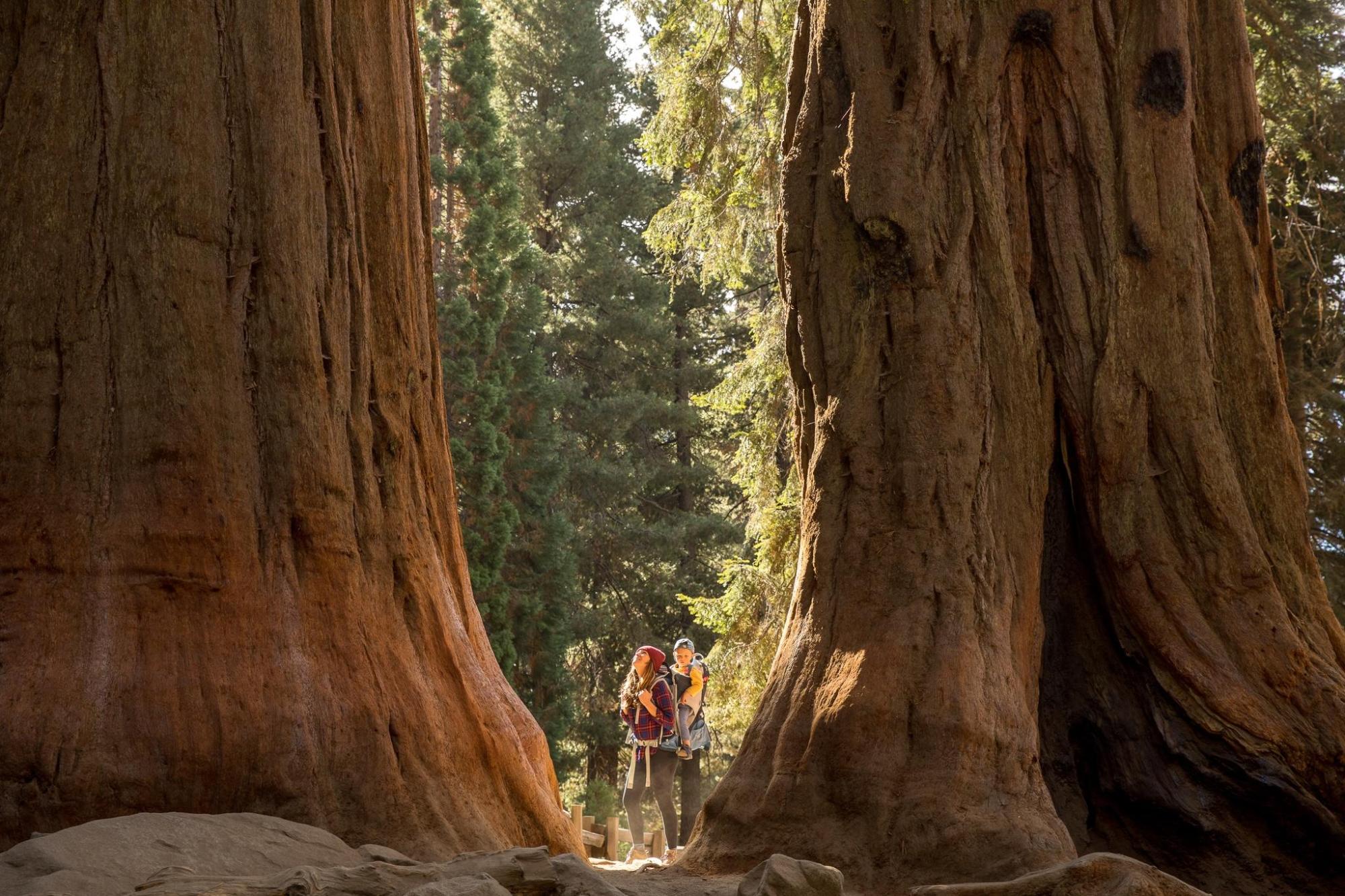
When considering trails, you should consider the stamina of the youngest or oldest member of your family, as you can always build up to longer hikes later.
Family hiking trips can be a budget-friendly way to enjoy the outdoors near your home or on your next family vacation. Your family can find a nature trail for your toddler’s first hike to a multi-day back-country hiking trip. From weekends to school breaks and summer trips, you and your kids can explore the outdoors with this easy-to-follow guide.
Get the whole family to plan
To make hiking a family affair, you should include everyone in the planning, even the youngest member. To do this, you can ask your family these questions:
- How long do you want to hike?
- What do you want to see on our upcoming hike?
- What's your favorite snack?
Top tip: When out on your hike, get everyone included by giving your children active tasks, like leading the group or finding a place to stop for a break.
Where to hike
If it's your family’s first hike, you might consider a park near your house. Before heading out, you can research to see if the park offers developed trails and amenities such as picnic tables and toilets with potable drinking water.
Depending on your children’s ages, you can start with a one or two-mile hike on an interesting trail. If your first hikes go well, you can move up to adding a mile or two with each hiking trip.
Hiking near your house is fun, but if you’re feeling adventurous, you can also add a hike to your next vacation. From state parks to national parks, families can find a hiking trail that suits their needs.
Along a hike, you can see wildlife from a safe distance so as not to disturb them in their natural habitat. Your family can also hike through different landscapes, such as a wildflower meadow or a forest.

Plan a realistic route
From finding an interesting route to the ideal trail length for your family, here are some considerations for your trip:
- Your children might enjoy a hiking trail that offers several types of scenery
- A loop trail might be preferred over an in-and-out trail, which requires you to backtrack
- Consider large elevation gains or losses when deciding on a trail
Top tip: You can research a hiking app or a park website for information about the trail’s length, elevation gains or losses, and the park’s landscape.
Pick the right trail
When considering trails, you should consider the stamina of the youngest or oldest member of your family, as you can always build up to longer hikes later. When considering park amenities, here are some items you might want:
- Picnic tables for lunch or snacks
- Water fountains or water bottle filling stations
- Staffed sites with park rangers
- Toilets: Portable, privies, or bathrooms with running water
Top tip: Often a park or a trail map designates the different types of bathrooms with different symbols.
Consider the season and weather
Depending on the hike’s location, you should consider the weather.
- Most weather apps detail monthly precipitation, so you can find a dry month for your hike
- Looking at the daily forecast, consider whether a morning hike or an afternoon hike is ideal
- Certain conditions are suited to certain months, for example, the desert is ideal to explore from late fall to early spring
Top tip: No matter the forecast, always pack waterproof layers in case of a sudden shower.
Prepare your children
As you plan for your hiking trip, you can prepare your children for a new experience. It's also a good time to share some safety tips:
Give your children a whistle to use if they get separated, and ask them to blow it three times as an SOS signal
Dress your child in bright clothing, like an orange or red hat or shirt
You can watch a video together showing what children should do if they get separated
Top tip: Make your hike fun by playing games, like I Spy or downloading a scavenger hunt.

Nature trails and interpretive trails
A short trail might work best for your family. Many pre-school children can tackle a one to one-and-a-half-mile hike. Many state and national parks include shorter trails for families. Best of all, shorter trails require less preparation. Here are some considerations:
Nature trails are shorter, more accessible trails that are easier to cover with travel prams or younger children with shorter strides
These trails often include interpretive signs that point out important features along the route
They're often conveniently located near visitor centers and are well traveled
Top tip: You can use a wheelchair-accessible trail for your family hike for a smoother surface.
Easier nature trails for families in the U.S.
Here are some of the best nature trails in the U.S. with nearby lodging:
- Quinault Rainforest Nature Loop travels through the Hoh Rainforest in Washington. Nearby, the Grey Gull features an outdoor pool and individual apartments.
- Ocean Path in Acadia National Park takes families along Maine’s Atlantic coast. Nearby Bar Harbor offers lodging and dining, including Bar Harbor Cottages & Suites with a two-bedroom cottage.
- Riverside Walk in Utah’s Zion National Park is a scenic trail next to the Virgin River. Springdale is the closest town to the park entrance and Montclair at Zion features kitchens and pull-out sofas, convenient for families.
Medium-distance family hiking trails
A medium-distance trail is around 2 to 6 miles and can be completed in one day. Your family can hike more remote landscapes, with additional preparations:
- Make sure you've downloaded maps to your phone to use without phone service or Wifi
- Consult with a park ranger to see if a wilderness permit is necessary
- Start calculating the mileage covered when you depart on your hike with your phone
- Ensure everyone on your hike is carrying enough water and food, plus layers for weather
Medium trails for families in the U.S.
Your family can hike long distances or tackle more elevation gain with these hikes, with some lodging along the way:
- Queen’s Garden & Navajo Loop Trails in Utah’s Bryce Canyon National Park take families into the canyon with its pink spires. Its gateway town, Bryce Canyon, offers lodging and dining, such as Best Western Plus Ruby’s Inn.
- Skyline Loop Trail starts near Mount Rainier National Park’s Paradise Inn and families can see glaciers as they pass summertime wildflowers. Families can find vacation rentals in Ashford or Packwood, outside the park.
- The Mist Trail in California’s Yosemite National Park passes waterfalls in its valley. Families will find lodging outside the park in Mariposa or Oakhurst.

Multi-day family hiking trips
For a family with older children or teenagers, you can expand your range and hike more than one day. There are a few options:
- An inn-to-inn hiking trip is the easier option, where your group hikes from one inn to another
- A two to three-day backcountry trip with a stay in a shelter is the next step, like visiting a remote cabin in a national park
- A weeklong hiking trip is the most strenuous option, where hikers carry everything they need, from food, water, and shelter
- Family hiking tours might be work where you have a guide
Top tip: You can find a transfer service to shuttle your bags from one location to another.
Multi-day hiking destinations in the U.S.
For a multi-day family hiking adventure, careful planning is required. Consider an inn-to-inn option:
- Inn-to-Inn hiking inside Shenandoah National Park travels along the Appalachian Trail. You can start or end your trip with a stay in a cabin or an Elkton vacation rental.
- The Walter Tishma Way travels through Colorado’s Rocky Mountains National Park, and hikers can use Estes Park as a base for lodging, dining, and tours.
- In Southern Oregon, the Rogue River Scenic Trail follows the waterway, with camping along the way and outfitters can move gear and luggage using a raft. Hikers can find cabins in Grants Pass or Ashland.
Top tip: If your family is headed out on a multi-day hike, let a trusted friend or family member know where you are going and when you will be back.
Factor in rest time
If you plan with a hiking app, it might suggest the time to hike a trail. Keep in mind that time usually doesn't include breaks and slower paces.
For an all day hike, you can divide your trip into sections:
- A morning break is perfect for snacks and water, an hour or two after starting
- At the lunch break, see if you made it halfway – if not, consider cutting the hike short.
- At the afternoon break, check the time and distance remaining
Top tip: For a longer hike, you should start earlier in the day to allow for ample time.
Dress for hiking success
The right attire is important when exploring the outdoors. You can consider the following:
- A walking stick – either commercial hiking poles or a long branch found on the trail
- A backpack for everyone
- Plenty of water in reusable water bottles
- Calorically dense food
- A sun hat or beanie if cool
- A small first aid kit, stocked with bandages
- Layers for the weather
- Pants protect your legs against insects and brush
- Ankle hiking boots or rugged trainers
- Flashlight
Top tip: The leader of the group can carry emergency supplies, such as a pocketknife, emergency blanket, or pop-up shelter and fire-making supplies.
Helping your family to explore the outdoors
From a toddler’s first hike to long-distance trails with your teenagers, hiking encourages a sense of discovery and appreciation of the outdoors. This list is just the beginning, as your family continues to navigate and connect with the outdoors.