What are accessible hotel rooms?

- They support mobility, sensory, or cognitive needs
- They include features like step-free entry and wider doors
- “Accessible” can mean different things at different hotels
Accessible hotel rooms are designed or adapted for people with disabilities. This could mean wider doorways, no steps, a bathroom you can wheel into, or even flashing lights for alerts instead of sound. However, the meaning of “accessible” can vary from hotel to hotel. Some may have a wider doorway but no roll-in shower. That’s why it’s so important to know what to look for – and to ask the right questions when you’re booking.
What to look for when booking hotels with accessible rooms?
While browsing accommodation options, you’ll often see labels like “accessible room.” However, not all listings provide the necessary information, and you can’t always rely on a hotel’s star rating or photo gallery to check if a room will meet your needs. Here are the features that really matter when it comes to accessible hotel rooms.
Enough room to move around
There should be space to move freely, especially for wheelchair users. That means space around the bed, between furniture, and in the corridors.
Bathroom
It’s crucial to have proper bathroom accessibility features. A hotel room can look great, but if the bathroom isn’t right, it may not be suitable. When checking if a bathroom is indeed accessible, look for these features:
- Roll-in shower: A roll-in shower has no step or edge. You can wheel right in, and it often comes with a seat and a handheld shower head. It can be more practical than a bath or a regular shower.
- Low sink: The sinks should be low enough for a wheelchair user to roll underneath and use comfortably.
- Grab bars: These are essential. They should be near the toilet and inside the shower area to offer support and prevent guests from falling.
Adjustable beds
Some hotels offer adjustable beds that can be raised or lowered, making it easier to find the right position or get in and out.
Wider doorways and hallways
If you’re using a wheelchair or walker, narrow spaces can be a nightmare. The doorways should be at least 32 inches wide, and the corridors should be clear of obstacles for easy navigation.
Automatic doors
A heavy door is a hassle for anyone. Some accessible rooms have push-button or remote-controlled doors that open automatically.
Accessible storage spaces
Closets and storage should be easy to reach. Make sure you can reach the hanging rod or shelves. Look for lowered rails and drawers that are easy to open.
Visual and audible alarms
This is an important feature for guests who are deaf or hard of hearing. Rooms should have visual fire alarms and flashing doorbells. For those who are blind or have low vision, there should be clear sound alerts and tactile features.
Lowered light switches and outlets
Switches and power points should be placed where they’re easy to reach in accessible rooms.

Types of accessible rooms
It’s important to remember that not all accessible hotel rooms are the same. Depending on the level of accessibility needed, here are the main types you’ll encounter.
Hearing accessible
These rooms are designed for people who are deaf or hard of hearing. They often have:
- Flashing fire alarms and doorbells
- Text telephone (TTY) devices
- Visual alerts for the phone or alarm clock
- Televisions with captions
Mobility accessible
People first think of these types of rooms when they talk of accessible rooms. These rooms usually include:
- Roll-in showers
- Grab bars
- Wider doorways
- Extra space to turn and move around
- Low or adjustable beds
Visual impairment accessibility
For guests who are blind or have low vision, these rooms may offer:
- High-contrast switches and labels
- Braille signage
- Clear, unobstructed paths
- Audio-enabled features
Cognitive impairment accessibility
The idea here is to make things calming and easy to understand. Features may include:
- Simple, logical layouts
- Easy-to-read signage
- Reduced noise and visual clutter
- Consistent lighting

How to find suitable accessible hotel rooms
Knowing what to look for is one thing – finding it is another. Here are some tips to help you find accessible hotel rooms that truly work for you.
1. Use search filters
Most major booking sites now let you filter for accessibility features. Booking.com, for example, allows you to use a “wheelchair accessible” filter when you search for your preferred room type.
2. Pick hotels that are fully accessible
It’s not only the room that matters. Think about how you’ll get into the hotel, use the restaurant, or access the elevators. Things to look out for:
Step-free entrances
Accessible parking
Elevators with Braille and audio
Level paths and ramps
Accessible restaurants and public toilets
3. Check the hotel’s official website
You can visit the hotel’s website for an accessibility page or detailed room descriptions. Many hotel websites include photos, floor plans, or lists of features for their accessible hotel rooms, which can help you get a clearer picture.
4. Ask the hotel directly
Practically, this is the best thing you can do. Call or email the hotel and ask about:
The types of accessible rooms available
Whether the bathroom has a roll-in shower or a low tub
The height of the bed
The availability of shower chairs or other mobility aids
Accessibility in public areas
5. Confirm the availability of accessibility items or extras
Some hotels offer extra aids, such as a shower chair, a hoist, or a bed rail, on request. Make sure you ask for them in advance, as these items are often in high demand.
6. Read reviews
One of the most reliable ways to find accessible rooms is to read reviews from other travelers with accessibility needs. Many people share their experiences in detail, and some even post photos or videos of the room.
7. Book early and double-check
Accessible hotel rooms are limited in number, so book as early as you can. Always confirm your booking directly with the hotel. Ask them to note your needs in your reservation.
8. Look for accessibility certificates or badges
Some hotels partner with accessibility organizations or receive certifications that confirm their facilities meet certain standards. If a hotel mentions being certified by an accessibility body, that’s usually a good sign.

What to look for when searching for accessible hotels?
In an accessible hotel, details such as the entrance and emergency procedure can affect comfort and safety. Here are some points to consider when looking for a hotel with accessibility features:
On-site parking with required features
Check whether the hotel offers accessible parking close to the entrance. The space should be wide enough for ramp access and ideally connected to the building by a step-free path.
Elevator access to all floors
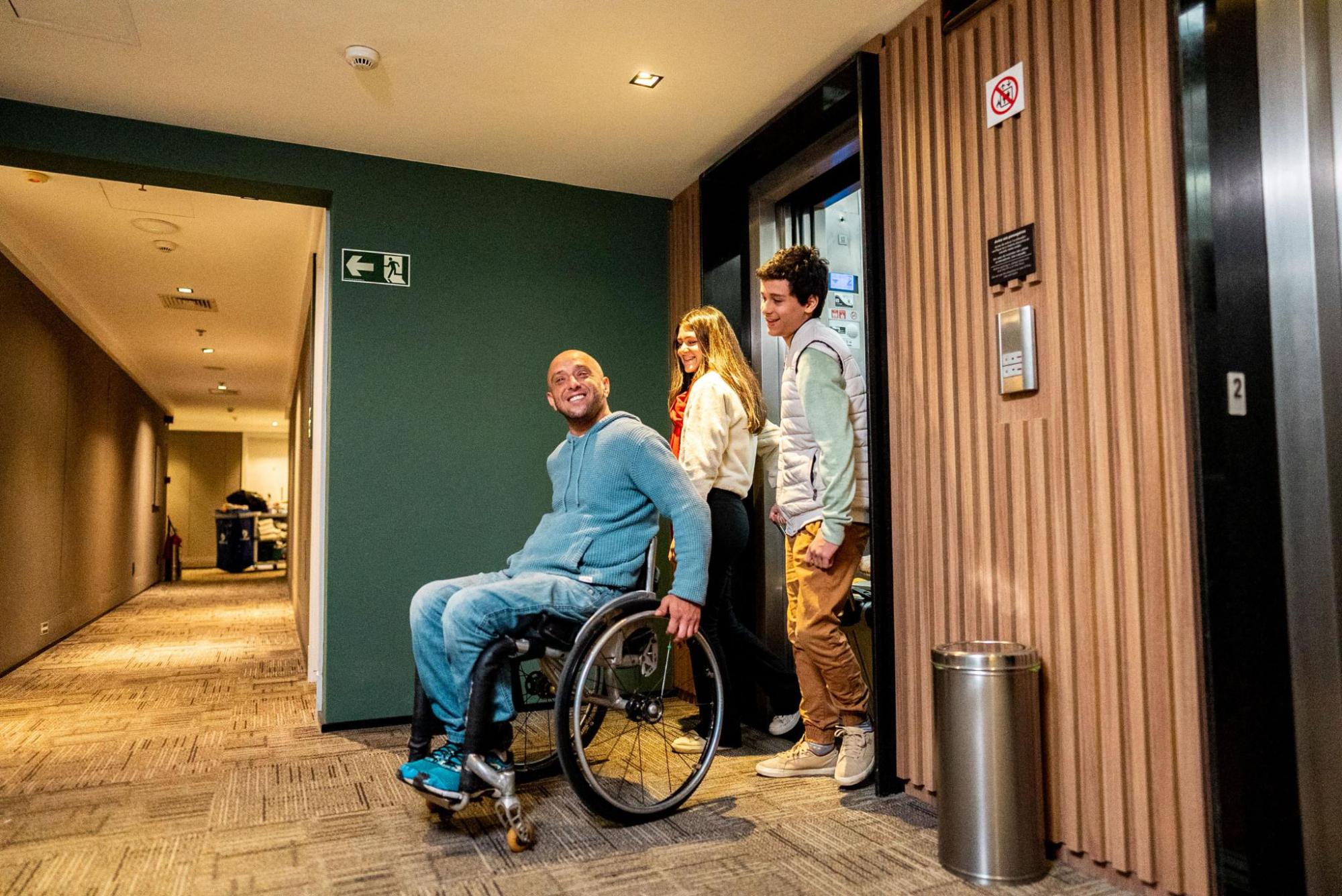
If your room isn’t on the ground floor, make sure there’s an elevator large enough for a wheelchair or mobility aid. The elevator should have easy-to-use buttons and audible floor indicators for guests with visual or hearing impairments.
Emergency procedures
Ask about the hotel’s emergency protocols for guests with disabilities and whether the staff is trained to assist guests who need help while evacuating in an emergency.
Service animal friendly
If you travel with a service dog or animal, it’s essential to ask the hotel in advance if they welcome them. Some hotels allow them and offer designated spaces for them.
Flooring and surfaces
Carpets can be tricky for wheelchair users or those with walkers. Ask whether the rooms and hallways have smooth flooring for easy movement.
The future of accessible hotel rooms
Accessibility in the hospitality industry is gradually improving. Many newer hotels are incorporating inclusive designs that benefit people with disabilities while making spaces more comfortable and convenient for everyone.
Why accessible hotel rooms matter
Accessible hotel rooms make travel easier and more enjoyable for everyone. Finding the right room can be challenging, but careful planning with the tips above may help.
Accessible hotel rooms aren’t just a checklist of features – they’re about making sure every guest feels included, comfortable, and safe. While more hotels now provide accessible features, there’s still room for improvement. Doing some research and asking the right questions can make a real difference.