What is a biometric passport?


- A biometric passport contains an embedded electronic chip that stores your digital photo and personal details
- You can identify one by looking for the small biometric symbol on the cover on the front cover
- Biometric passports offer faster border crossings through e-gates and enhanced security against fraud
A biometric passport is a passport with an embedded electronic chip that stores your photo and key identity details. If you've noticed a small rectangular symbol on your passport cover, you're already holding a biometric passport, also known as an e-passport. But what is a biometric passport exactly and why has it become the global standard for international travel?
A biometric passport is a traditional paper passport with a digital upgrade. It combines the familiar photo and personal details you'd expect with cutting-edge technology that stores your information electronically. This innovation has transformed how we move through airports, making border control smoother whilst adding extra layers of security.
Biometric vs. regular passports: The key difference
The main distinction in biometric passport vs regular passport comes down to one thing: technology. A regular passport contains only printed information: your photo, name, date of birth, and passport number. A biometric passport includes all of this, plus an electronic chip embedded in the back cover.

What makes a passport biometric?
A passport becomes biometric when it contains a contactless integrated circuit chip. This tiny piece of technology stores your biometric data – unique physical characteristics that identify you as an individual. When you apply for a biometric passport, authorities capture this data digitally and encrypt it onto the chip.
The shift to biometric passports began in the mid-2000s, following international agreements to strengthen border security. Today, more than 150 countries issue biometric passports, making them the standard for international travel rather than the exception.
The role of the embedded chip
The chip in your passport securely stores your digital information. At border control, specialized scanners read the chip to help verify your identity quickly and accurately. The chip communicates wirelessly with the reader, but only at very short range, so your passport must be close to the scanner.
This technology doesn't replace the visual inspection of your passport. Instead, it adds an extra verification layer that makes the process faster and more secure.
How to identify a biometric passport
Wondering how to check if a passport is biometric? It's straightforward once you know what to look for.
The international biometric symbol
The clearest sign is the small rectangular symbol on your passport's front cover. It shows a circle (representing a face) inside a rectangle (representing a microchip), with two horizontal lines below. This universal biometric symbol on a passport indicates that your document contains an electronic chip.
If you're holding a UK passport issued after 2006, a U.S. passport issued after 2007, or most passports issued by European, Asian, or Oceanic countries in recent years, you almost certainly have a biometric passport. The chip sits in the back cover and you might notice a slightly thicker area where it's embedded.
The main benefits of a biometric passport
The biometric passport benefits extend beyond just keeping up with technology. These documents have genuinely improved the travel experience in several ways.
Enhanced security and fraud prevention
Biometric passports are considerably harder to forge or tamper with than their predecessors. The encrypted chip stores data that can be verified against international databases. The chip adds a layer of digital verification, which makes forgery and tampering much harder. The digital photo on the chip is matched against the printed photo and both are compared with your face at border control.
This security helps countries manage their borders more effectively whilst maintaining the flow of legitimate tourism and business travel in addition to protecting individual travelers.
Faster immigration with e-gates
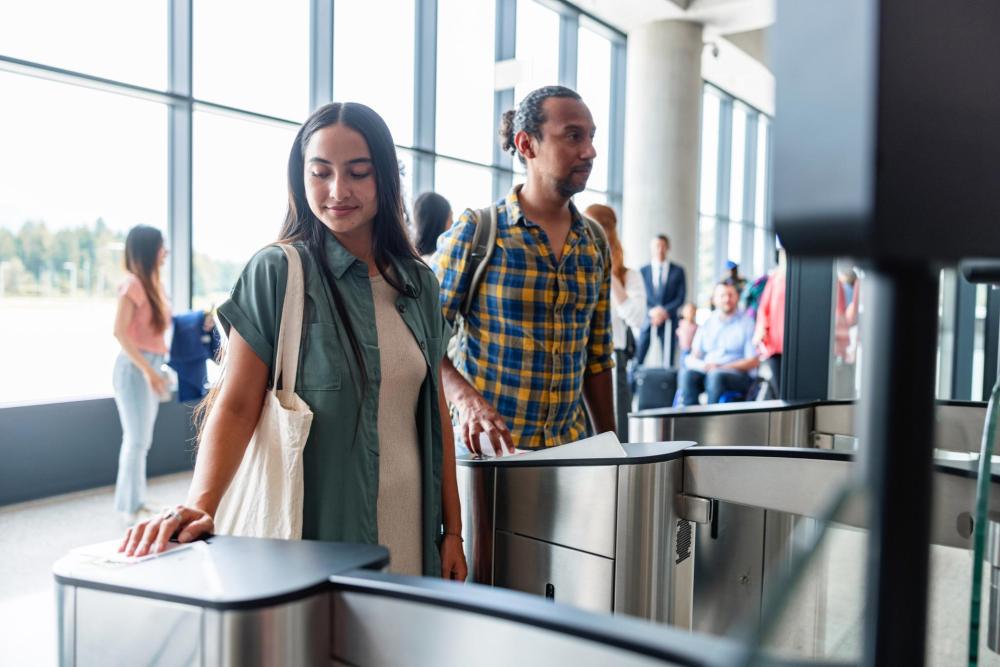
One of the most noticeable advantages is access to automated border control. E-gates use facial recognition technology to compare your face with the photo stored on your biometric passport chip. The process takes seconds – you scan your passport, look at the camera, and walk through when the gate opens.
These automated systems have transformed arrival experiences at major airports. At some airports, this can make border checks noticeably quicker.
Biometric data: What's stored on the chip?
Understanding what information lives on your passport chip can help put any privacy concerns in context. The data is encrypted and protected and it's limited to what's necessary for identity verification.
Facial recognition data
Your digital photograph is the primary piece of biometric data stored on the chip. It's captured according to strict standards (specific dimensions, neutral expression, no glasses) to ensure consistency for facial recognition systems. This digital image is the baseline that border control systems use to verify you're the legitimate passport holder.
Fingerprints
Some countries include fingerprint data on their biometric passports, though this isn't universal. The European Union, for instance, requires two fingerprints to be stored on passports issued to adults. The United States currently includes fingerprints only in its visa application process, not in passports themselves. This varies by country based on their security requirements and privacy laws.
Other biometrics
Whilst facial recognition forms the core of most biometric passport systems, the technology allows for other identifiers to be stored as standards evolve. Iris scans represent one possibility, though they're not yet widely implemented in passport systems. The chip's capacity means additional security features can be added as technology advances.
It's worth noting that the chip stores only what's necessary for identity verification. It doesn't contain details about your travel history, financial information, or other personal data beyond what's already printed in your passport.

FAQ
Do you need a biometric passport to travel?
Whether you need a biometric passport depends on where you're traveling. Many countries now require biometric passports for visa-free entry or simplified visa processes. The U.S. Visa Waiver Program, for example, requires travelers from participating countries to have biometric passports.
Even when not strictly required, having a biometric passport typically makes your journey smoother. You'll have access to e-gates and automated systems that speed up immigration and you'll avoid potential issues if requirements change whilst you're traveling.
How to get a biometric passport
Getting a biometric passport follows the same basic process as renewing any passport, with one additional step. When you apply, you'll need to provide a digital photo that meets specific biometric standards. Many countries now require you to have this photo taken at an official location or by an approved photographer.
In the UK, for instance, all new and renewal passports are automatically biometric, so there is no separate application process. You submit your application online or by mail, provide your photo, and your new passport arrives with the chip embedded. The same applies in most countries that issue biometric passports – the electronic chip is now standard, not an optional extra.
For specific requirements and how to get a biometric passport in your country, check with your national passport office or embassy. They'll guide you through the application process, including where to have your biometric photo taken and any additional documentation needed.
