Flying with a wheelchair: Top tips for smooth air travel

- Request airport assistance early
- Label your wheelchair or scooter
- Take before and after pictures of your mobility device
- Pack essential tools and spare parts separately
Air travel opens up a world of opportunities, making it easier to explore new destinations, reconnect with loved ones, and experience different cultures. For travelers using a wheelchair or mobility aid, planning ahead can help make the journey smoother. From baggage fees and varying airline policies to damage prevention and regulations, understanding what to expect at each stage of the journey helps everything run more smoothly.
This guide outlines your rights as a passenger and offers practical advice for preparing your mobility device for air travel. Whether you’re flying with a manual or electric wheelchair, a scooter, or another mobility device, these tips will help you stay organized so you can travel comfortably and confidently.
Understanding your passenger rights when flying with a wheelchair
Knowing your passenger rights is one of the key ways to make air travel smoother and more enjoyable. Airlines are legally required to assist, and there are frameworks in place across many regions to protect passengers who use mobility devices.
Protections in air travel
Airlines cannot refuse to transport you just because you use a wheelchair, and they must accept your mobility device at no extra charge. Strong protections exist in many countries to make sure there’s equal access for disabled travelers, including:
UK and EU: Regulation (EC) No 1107/2006 guarantees equal rights and airport assistance for passengers with reduced mobility.
U.S.: The Air Carrier Access Act (ACAA) bans discrimination and requires airlines to provide support like boarding assistance and proper handling of mobility aids.
Canada: The Accessible Canada Act (ACA) and related accessibility regulations help protect equal treatment and assistance for travelers with disabilities.
To request support, contact your airline at least 48 hours before departure so services like airport assistance or wheelchair transfers can be arranged. Airline staff are trained to assist passengers safely and respectfully.
What to do if things go wrong
Even with these protections in place, issues like damage or delays can occasionally happen. If a problem arises at the airport or during your flight, take prompt action to resolve it. Take photographs, ask for written confirmation, and contact the airline’s disability support team directly, as they can often resolve issues more efficiently than standard customer service.
Equipment damage
Airlines are responsible for handling wheelchairs and mobility devices with care and cannot require you to sign a liability waiver. If your equipment is damaged during your flight, take the following steps:
Report the damage immediately before leaving the airport.
File a damage claim with the airline and request written confirmation.
Ask about repairs or replacement, as airlines are responsible under their wheelchair damage policy.
Request a temporary replacement or reimbursement for related expenses while repairs are completed.
Escalate unresolved issues to the relevant authority – either the Civil Aviation Authority or the Department of Transportation.
Preparing your mobility device for air travel
Each type of mobility device has specific requirements for safe transportation. Proper preparation makes sure you’re compliant with airline rules and helps minimize the risk of damage.
Whether you’re using a manual wheelchair, a powered chair, or a scooter, understanding the requirements makes check-in and boarding much smoother. Check the airline's website or contact them directly to understand their policies concerning mobility devices, including details about battery types and removal procedures.
Flying with a manual wheelchair
Manual wheelchairs are usually gate-checked, allowing travelers to use them right up to boarding. Staff will transfer you to an aisle chair to reach your seat and your manual wheelchair will be stored in the cargo hold.
To prepare your device:
Remove detachable parts such as cushions, footrests, or side guards.
Label your wheelchair with your name, contact details, and any specific handling instructions.
Take photographs before check-in to document its condition in case any issues occur.
Flying with a power wheelchair or scooter
Traveling with a power wheelchair or scooter requires additional preparation due to battery types and safety procedures. To help protect your mobility device during air travel:
Notify the airline in advance of your wheelchair or scooter model.
Confirm the battery type (gel, dry cell, or lithium).
Bring the manufacturer’s manual in case battery removal or special handling is required.
Disconnect or shield joysticks and secure any loose parts.
Consider carrying a small toolkit, with tools like an Allen wrench and spare screws, for reassembly after landing.

Protecting your wheelchair during air travel
Preparing a wheelchair for a flight involves more than folding it down or removing a battery. Wheelchairs can endure rough handling in cargo holds, so taking sensible precautions to reduce the risk is key. Before heading to the airport, make a detailed list of all removable parts and carry them with you on the plane. Small precautions can help reduce the risk of damage.
Tips include:
Use padding such as bubble wrap or foam around delicate parts.
Remove accessories, cushions, or detachable parts and carry them in your hand luggage.
Secure moving parts like footrests or brakes with strong tape
Label fragile areas.
Attach a luggage tag or label with your contact details and handling instructions.
Invest in a wheelchair travel bag designed specifically for air travel.
Smaller aids, like crutches or walking sticks, can be stored in the cabin. While airline policies covering wheelchair damage offer compensation, preventing harm in the first place provides greater peace of mind.
What to expect on at the airport
Traveling with a wheelchair or mobility device is much smoother when you know what to expect from check-in to arrival. Allow a bit of extra time for assistance and security screening.
Navigating airport security with a wheelchair
At airports in the United States, the Transportation Security Administration (TSA) requires additional screening for wheelchairs and mobility devices. In the UK, similar procedures apply at airport security checkpoints, with trained staff available to assist throughout the process.
What to expect at security:
Manual wheelchair users can usually remain seated during screening.
Security checks typically include a visual inspection and swab test.
Airport assistance teams help guide passengers through each step.
Additional steps for power wheelchairs and mobility devices:
You may be asked to follow specific battery safety procedures.
In some cases, battery disconnection or inspection may be required.
Lithium batteries must meet airline regulations and be clearly labeled.
To help the process run more smoothly:
Bring your device manual or keep battery disconnect instructions on your phone.
Allow an extra 15–30 minutes for security screening.
Request assistance with mobility through terminals
Airport wheelchair assistance services help passengers navigate terminals safely and efficiently. It’s best to request this service when booking your flight or contact the airline at least 48 hours before departure. Even if you use your own wheelchair, assistance can be valuable for navigating unfamiliar airport layouts, handling luggage, and making connections easier to manage.
Boarding the plane with a wheelchair
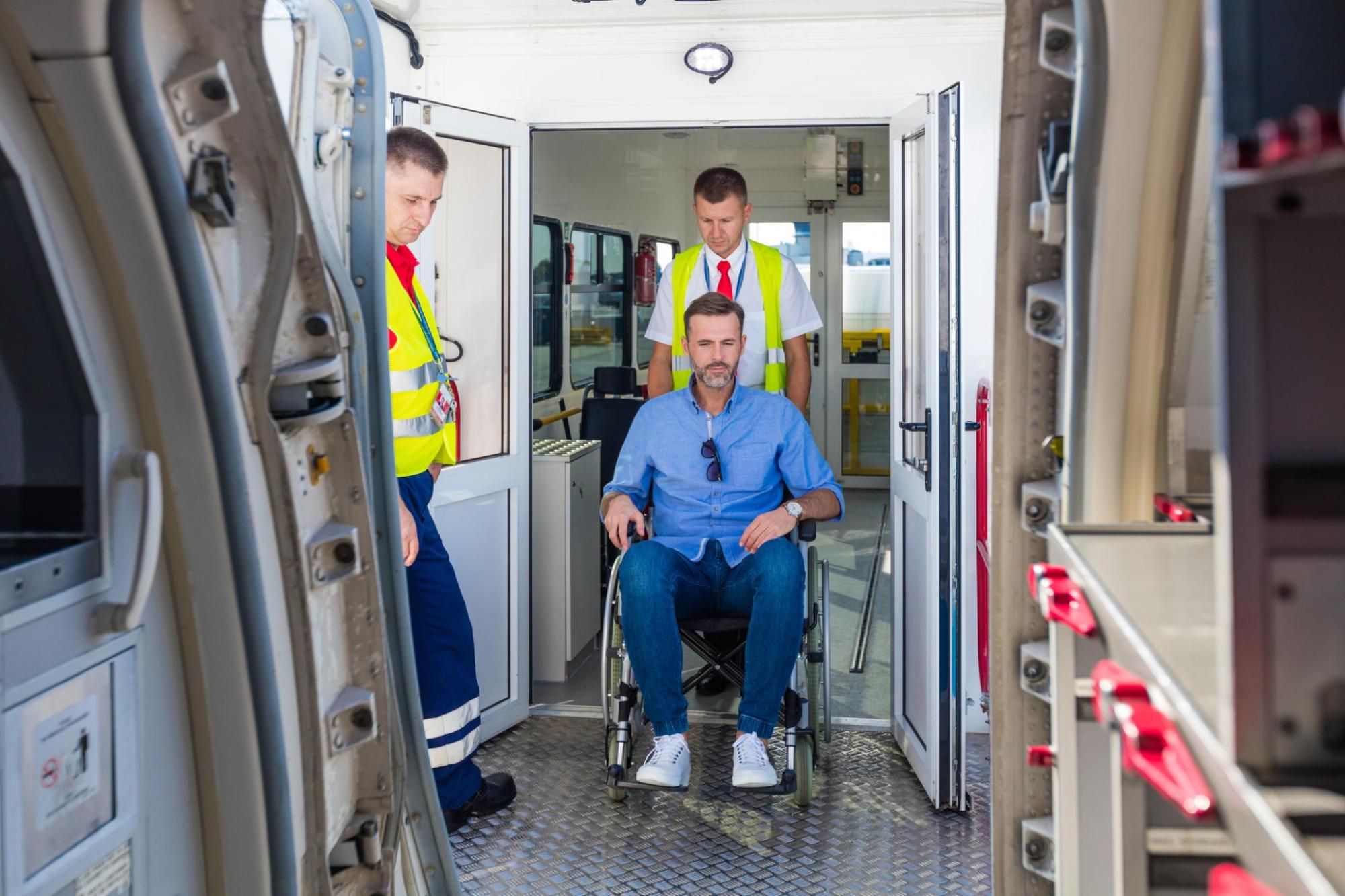
Most airlines allow passengers with wheelchairs and their companions to board first. Pre-boarding offers the space and time needed to transfer to your aircraft seat comfortably, without feeling rushed or crowded. During pre-boarding, a staff member will meet you shortly before boarding to help you into an aisle chair if needed and assist you to your in-cabin seat. Your mobility device will then be gate-checked and stored in the cargo hold for the duration of your flight.
Seating arrangements
All passengers have the right to sit comfortably and safely. While wheelchairs can’t be used during the flight, you can request an aisle seat near the lavatory or at the front of the plane. Airlines cannot charge extra for seats that accommodate mobility-related needs.
Disembarking
Once the aircraft lands, passengers requiring wheelchair assistance will disembark last, allowing staff sufficient time and space for safe transfers. If you gate-checked your wheelchair, it’s usually returned at the aircraft door or jet bridge. When retrieving a wheelchair or scooter from the hold, examine it thoroughly for signs of damage. If you find any issues, report them immediately and seek assistance following the airline’s wheelchair damage policy.
Travel confidently when flying with a wheelchair
Flying with a wheelchair can be straightforward when you know what to expect and prepare in advance. Your rights make sure you receive the assistance you need, so don’t hesitate to speak up if something isn’t handled properly. Taking time to secure, label, and document your wheelchair helps protect it and reduces stress. Whether you travel with a manual chair, power wheelchair or a scooter, a few simple steps can help you travel with confidence and comfort.
Remember to arrive early, keep your contact details visible and carry essential tools in case of an emergency. If an issue does occur, airlines are responsible for repairing or replacing damaged equipment. With preparation and confidence in your rights, you can focus on enjoying your trip and the experiences ahead.